Plastic chairs and cold weather: where the winter cracks come from
31 May 2026 · YIMIGA export desk · 4 min read
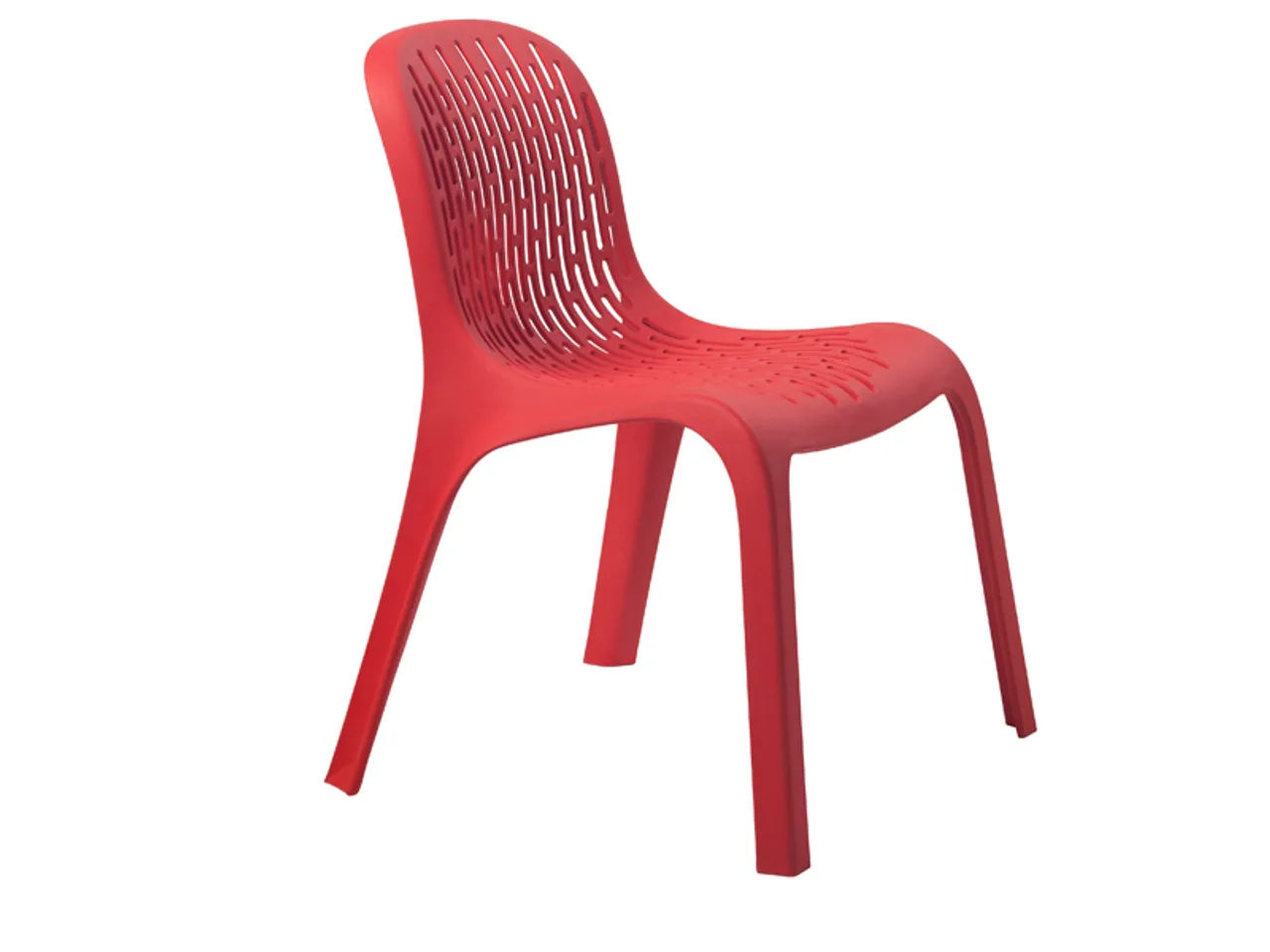
Every winter a version of the same email arrives: chairs that ran a full summer season without a complaint started cracking in December — at the stack, at the dock, in the unheated barn they are stored in. The buyer suspects a bad batch. It almost never is. It is the same chair meeting different physics, because plastic that is tough at 20°C can be brittle at minus 10, and which plastics go brittle is known in advance. If you sell into Canada, Scandinavia, Russia or any market with a real winter, this is worth five minutes.
Why cold turns toughness off
Polymers absorb a knock by letting their molecular chains flex and slide. Cool the material enough and that motion freezes out: the same impact that bounced off in July finds nothing moving to absorb it, and the part cracks instead of denting. Where that switch happens depends on the resin. Polypropylene homopolymer — the everyday resin of injection-moulded monoblock and stacking chairs — loses its impact strength sharply as you approach 0°C, which is why a PP chair that lives outdoors in a northern winter is living on borrowed time. HDPE is a different animal: it stays ductile to around minus 40, which is one reason it is the resin of choice for everything that must survive outdoors, from pipe to playground parts to our blow-moulded chairs.
There is a middle path: impact copolymer PP, which blends a rubbery phase into the resin to keep some flex alive below freezing. It costs more than homopolymer and it is the right call for a PP chair that will see cold service. But if the chairs genuinely live outside through winter, the simpler answer is usually the one we ship the most of into cold markets — a double-walled HDPE seat that treats minus 15 as a normal working day.
The loading dock is where chairs actually die
Here is the pattern behind most winter breakage claims: the chairs are fine in the container, fine in storage, and crack during handling — because cold-soaked plastic plus a drop is precisely the combination cold embrittlement punishes. A container that crossed Siberia or sat in a Hamburg yard in January arrives with the cargo at ambient: think minus 10 or colder, soaked through for days. Crews then unload it the way they unload everything — stacks dropped the last few centimetres, chairs tossed onto pallets — and the cracking starts.
The fix costs nothing. Receive a winter container gently: no dropping stacks, no throwing, and if you can, let the chairs warm in the warehouse for a day before hard handling or aggressive de-stacking. The same chair that cracks at minus 12 takes the identical abuse without a mark at plus 10. We put a one-line handling note on winter shipments into cold markets for exactly this reason — the cheapest quality intervention we know of.
Unheated storage: mostly fine, with two rules
Good news for rental operators and venues with cold barns: storing plastic chairs unheated does no harm by itself. Cold does not degrade the resin the way UV does; the chairs simply sit there brittle until spring. The two rules are about what happens while they are brittle. First, stack to the rated height and no higher — a winter stack is less forgiving of the side-knock that a too-tall column invites. Second, do not reset a room at speed with chairs straight out of a freezing store; give them an hour somewhere warm if the event handling will be rough. Folding mechanisms deserve a thought too: steel hinges do not embrittle, but trapped condensation freezes, so a folding chair stored damp in the cold can fight you at the hinge until it thaws.
What changes in the recipe for a cold market
When an order is flagged for a genuinely cold destination, three things move in our spec. The resin, as above — HDPE or an impact-copolymer PP rather than the homopolymer a warm-market chair would happily use. The wall, slightly — a touch more material at the corners buys margin exactly where cold-soaked stacking knocks land. And the colourant, which surprises people: heavily loaded pigments and some mineral fillers stiffen a part and shave a little off its low-temperature toughness, so a recipe that is fine in white can be marginal in a deeply pigmented dark colour. None of these changes show in a photo and together they move the unit price by less than the cost of replacing one cracked chair under warranty. The point is that “the same chair” should not actually be the same chair in Dubai and in Helsinki, and a supplier who quotes one recipe for both has made the decision for you without telling you.
The trade-off, stated plainly
Cold capability is a real spec and it costs real money: impact copolymer over homopolymer, or a blow-moulded HDPE build over a budget injection PP one. If your chairs serve heated banquet halls in a cold country, do not pay for it — the chairs commute from a warm truck to a warm room and never feel the winter. If they store unheated, serve outdoor winter events, or just get received across a frozen dock every January, the upgrade is cheaper than the first season of breakage claims. Tell us honestly which one you are and we will quote the recipe that matches, not the dearest one.
We build both lines to BIFMA/EN test methods, cold-impact testing through a third-party lab can be arranged per order, and our rental fleet guide covers the duty-rating side. Send your market and storage situation through the contact form or read how a dedicated run works on the OEM / ODM page.