UV stabilization for outdoor plastic chairs: where the colour goes and how we hold it
18 May 2026 · YIMIGA export desk · 4 min read
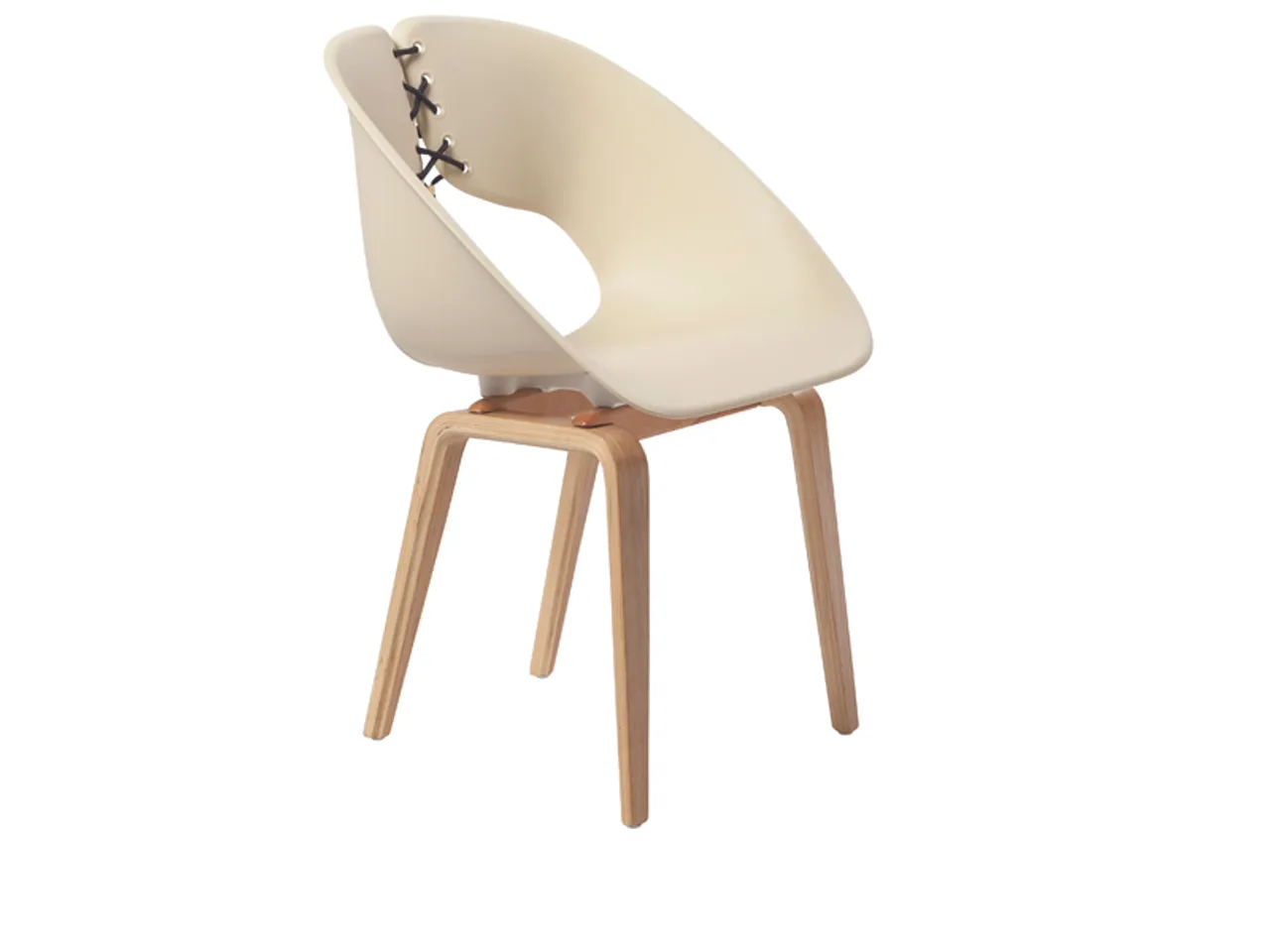
A buyer in a hot market sends the same complaint every few seasons: the chairs went chalky and pale after one summer outdoors. That is not a freak batch. It is almost always a chair that left a factory without enough UV additive, and it is the single most common reason an outdoor plastic chair gets returned. Here is how the colour actually leaves, and how we keep it in.
What sunlight does to the plastic
Raw polyethylene is not UV-stable on its own. Ultraviolet light breaks the polymer chains at the surface, and you see it as fading, a chalky bloom, and eventually brittleness where the chair cracks if you flex it. The fix is additive, mixed into the molten resin before the chair is formed so it becomes part of the material rather than a coating that wears off. Two families do the work.
Carbon black is the strongest UV screen there is — it absorbs the radiation and dumps it as harmless heat, which is why black HDPE pipe and pond liners are rated for fifty years and more outdoors. The catch is obvious: it only makes black or very dark parts. For a bright blue or a sand-coloured leisure and outdoor chair, you cannot lean on carbon black, so we use HALS — hindered amine light stabilizers — which protect coloured plastic without turning it dark. HALS is the workhorse for any non-black outdoor furniture.
How much fading is normal, and how much is not
No coloured plastic holds its exact shade forever in full sun — that is physics, not a defect. A well-stabilized chair shows a slow, even mellowing over years that most buyers never notice; an under-dosed one goes visibly chalky and pale in a single hard summer, and then starts to crack when you flex it. The way the industry talks about this is service life: carbon-black HDPE in demanding outdoor uses like pipe and pond liner is rated for fifty years and more, which tells you the ceiling the material can reach when the protection is right. A garden chair does not need fifty years, but the same chemistry that gets pipe there is what keeps your chair looking sold in year three.
The trade-off buyers do not see on a sample
This is where price games happen. You cannot tell a properly stabilized chair from an under-dosed one by looking at a fresh sample — they are identical on day one. The difference shows up twelve months later in a customer's backyard, by which time it is your warranty problem, not the supplier's. A cheaper quote often means the UV package was thinned to save cost, and the additive is one of the more expensive things in the recipe. So the honest trade is up front: a fully dosed outdoor chair costs more per unit, and it is money spent on a number you only collect in year two and three of the chair's life.
Our steer is blunt. If the chairs live indoors — a banquet hall, a canteen — do not pay for a heavy UV package you will never use; it is wasted cost on a chair that never sees the sun. If they sit in direct sun at a café terrace or a poolside rental, hold the line on stabilization, because a faded fleet is the fastest way to lose a repeat rental customer. For dark colours we use carbon black; for brights we use a HALS package and tell you so in writing. We will also tell you honestly that a very pale or fluorescent colour is harder to hold than a mid-tone — the pigment itself matters as much as the stabilizer, and we pick weathering-grade pigments for outdoor runs.
What to ask any supplier, including us
Ask whether the UV protection is carbon black or HALS, ask roughly what the additive loading is, and ask for a chair to be left in the sun rather than judged on a showroom sample. We build our outdoor range to BIFMA/EN methods and weathering tests can be arranged through a third-party lab. If you are buying for a sunny market, send us the destination and the colours on our contact form and we will spec the right package — or read how we set a colour run on the OEM / ODM page. The recycled-HDPE note covers how regrind changes the UV story.